Call for the Ban of Single-Use E-cigarettes
Joint Statement | February 2024 | EERA and partner associations
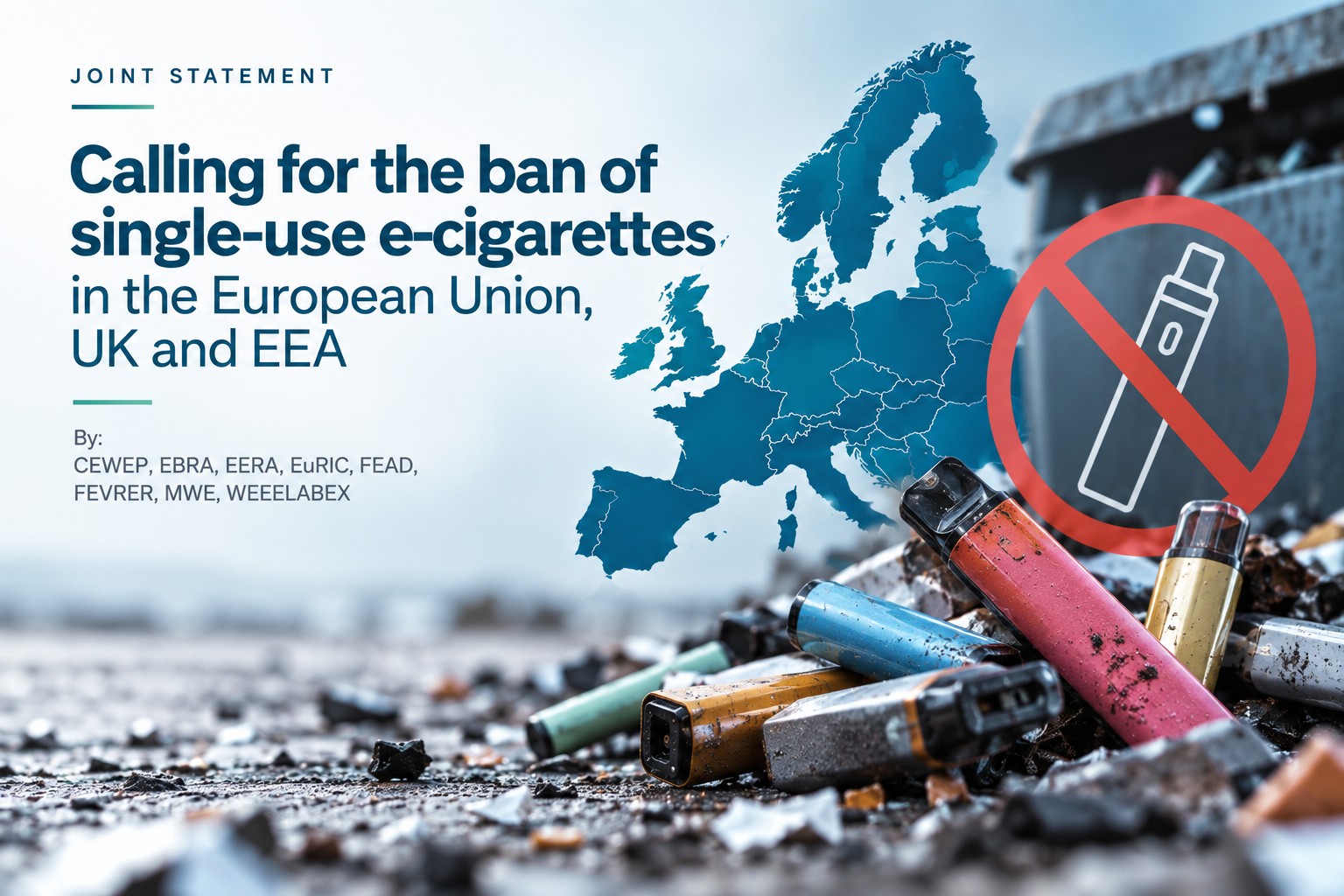
EERA joined seven European waste management and recycling associations in calling for a complete ban on single-use e-cigarettes. The joint statement highlights the environmental impacts associated with disposable vapes, including littering, improper disposal, lithium battery fire risks and the loss of valuable materials that could otherwise contribute to the circular economy.
Why single-use e-cigarettes are a WEEE issue
Single-use e-cigarettes combine plastics, electronic components, lithium batteries and valuable metals in a product designed to be discarded after a relatively short period of use.
Under producer responsibility rules in the EU, UK and EEA, e-cigarettes are classified as electrical and electronic equipment and are therefore subject to obligations relating to collection and end-of-life recycling. The joint statement raises concerns about producer registration, enforcement and the number of devices that do not reach appropriate WEEE treatment systems.
Environmental and recycling impacts of single-use e-cigarettes
The devices typically contain an atomiser, a lithium battery and a cartridge or tank containing e-liquid. They also contain valuable materials, including steel, aluminium, copper and lithium, as well as plastic components.
The joint statement highlights several consequences associated with their disposal:
Littering and potential environmental contamination
Loss of valuable and reusable metals and lithium
Inadequate producer and distributor participation in WEEE collection and treatment systems
Fire risks from incorrectly discarded lithium batteries, affecting household and street collection bins, municipal collection containers, waste collection vehicles and waste management facilities.
Call for action
The joint statement calls for single-use e-cigarettes to be banned in Europe by the end of 2024 at the latest. It refers to powers under REACH to restrict products containing substances that pose a risk to human health or the environment, alongside national environmental protection legislation and cites previous action on single-use products, including plastic straws and bags, as a precedent for regulatory action.
Read the joint statement in full, including its references and details of the participating associations.
Related Publications: