Green-Listing WEEE Shipments
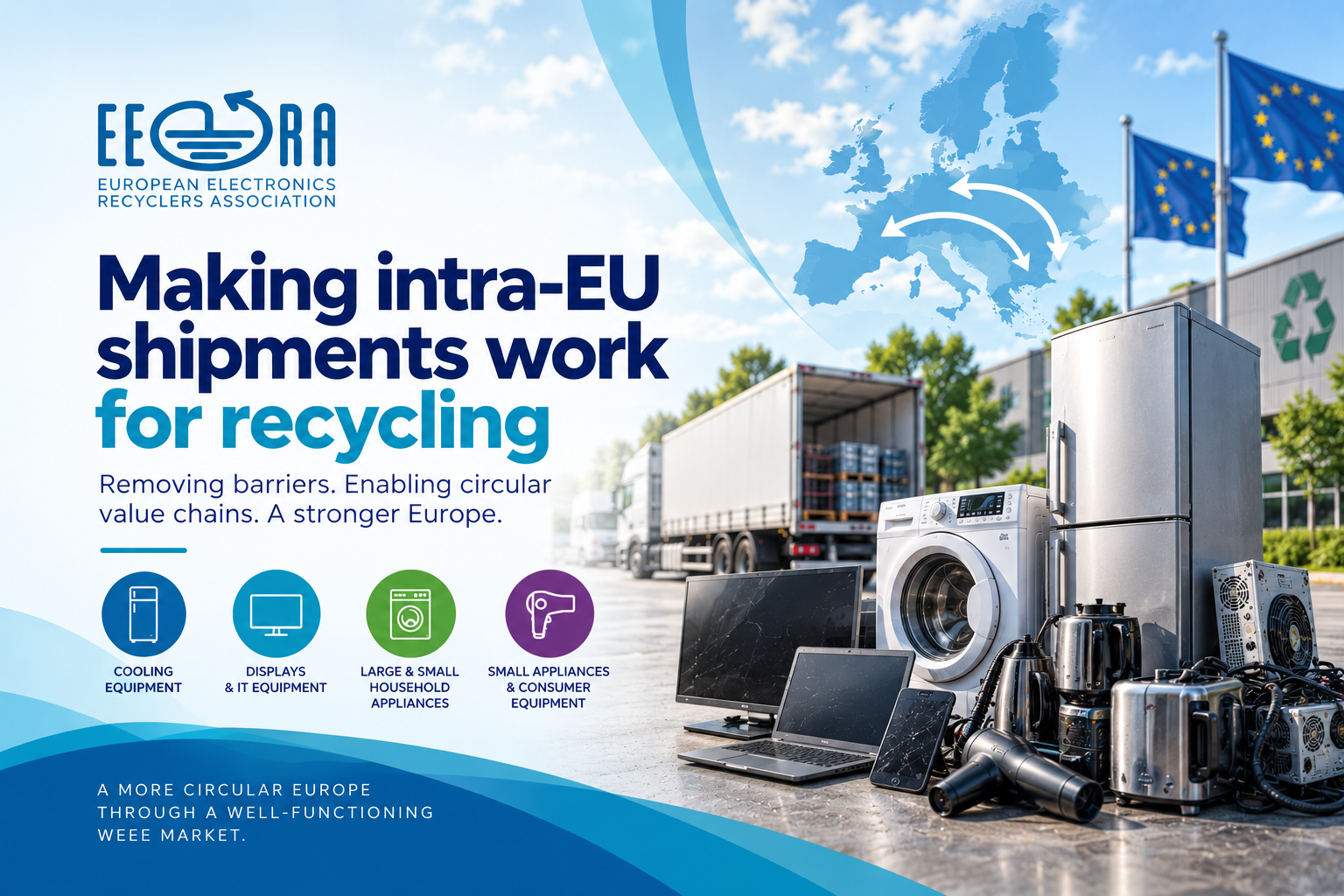
Making intra-EU shipments work for recycling
European WEEE recycling operates through interconnected value chains. Waste and secondary raw materials often need to move between Member States and specialised facilities before the recycling process is complete.
In September 2026, EERA responded to the European Commission's draft Delegated Act on the green-listing of certain wastes under the Waste Shipment Regulation. We welcomed the initiative to green-list non-battery-containing WEEE and related recyclates and reduce unnecessary barriers to their movement for recycling within the EU.
Why green-listing matters
The draft would allow suitable non-hazardous waste to move under the general information requirements of Article 18 rather than the prior written notification and consent procedure.
For WEEE recyclers, this can reduce administrative burdens and improve access to specialised, permitted and EN 50625-certified recycling facilities across Europe. This is particularly important where recycling involves several treatment stages in different Member States.
More efficient movement of these materials can also support the EU market for high-value and critical secondary raw materials and help retain valuable resources within the European economy.
Proposed new waste entries
EERA particularly welcomed the proposed introduction of:
BEU09 for non-hazardous electrical and electronic waste
BEU10 for solid, inert permanent magnets from end-of-life products
BEU11 for metal waste from end-of-life vehicles.
Clear and harmonised implementation is essential
Green-listing will only deliver its intended benefits if the new entries are interpreted consistently across Member States.
EERA therefore called for further guidance on BEU09, including illustrative examples of the waste streams and fractions covered. This would help operators and competent authorities classify materials consistently and reduce the risk of delays or rejected shipments.
We also requested greater clarity on EU49 and, in particular, how waste falling under EU49 should be distinguished from BEU09. Without a clear and harmonised distinction, different national interpretations could create new barriers to legitimate intra-EU recycling shipments.
EERA's key message
European WEEE recyclers support the direction of the Commission's green-listing initiative. Suitable non-hazardous waste should be able to move efficiently between authorised and certified operators so that it reaches the facilities best equipped to recycle it.
EERA is calling for clear and harmonised implementation of BEU09 and EU49 so that the new framework strengthens, rather than fragments, the European market for recycling and secondary raw materials.
Related Publications: