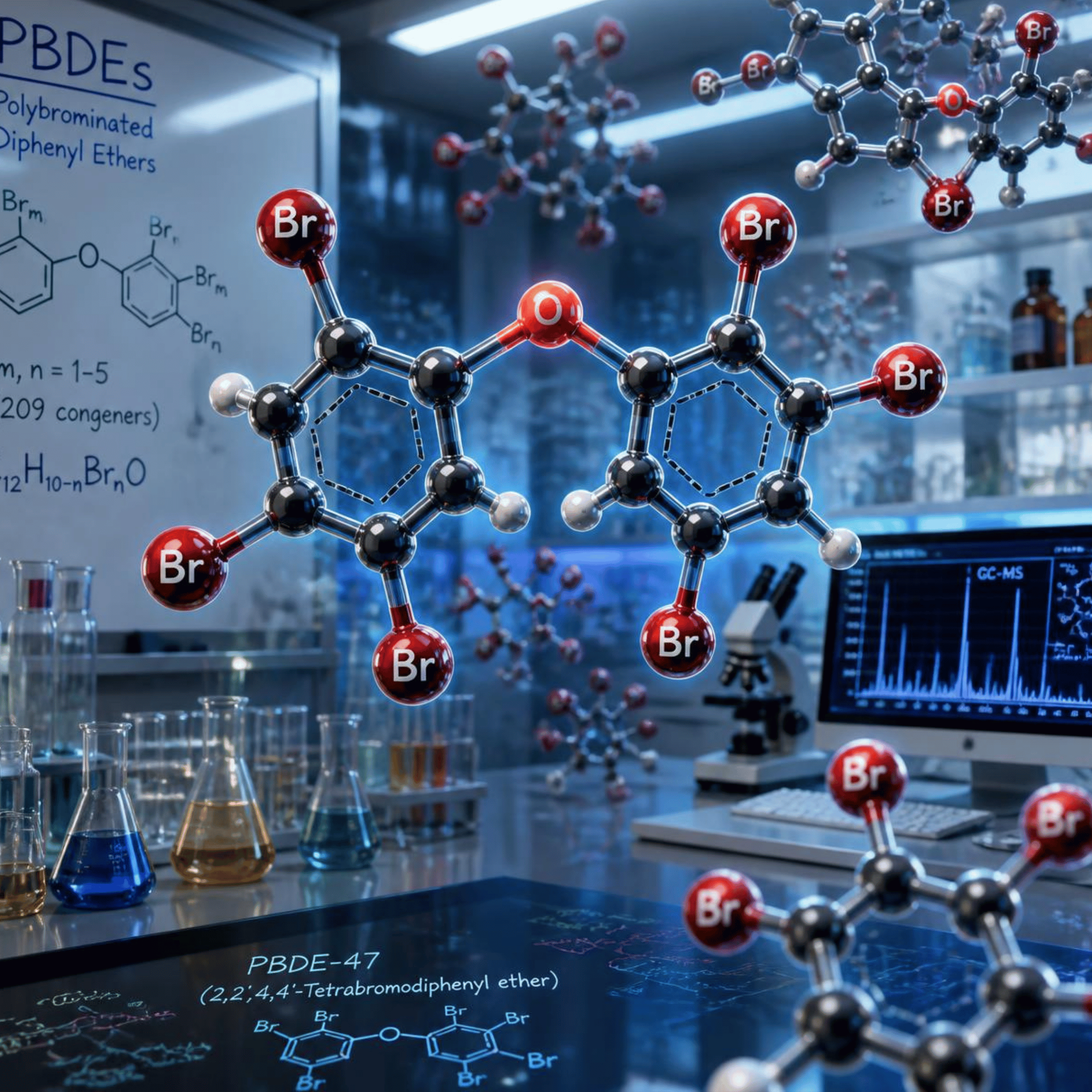
Setting Workable Limits for PBDEs in Recycled WEEE Plastics
Lower limits for persistent organic pollutants can strengthen environmental protection, but only if recyclers can reliably measure and comply with them. In its October 2022 statement, EERA argued that proposed changes to PBDE limits risked moving faster than the available testing technology, potentially reducing rather than increasing the recycling of WEEE plastics.
The challenge
The EU was considering reducing the unintentional trace contaminant (UTC) limit for the sum of PBDEs to 200 mg/kg. EERA's concern was not the objective of reducing POPs, but whether the proposed threshold could be reliably implemented in complex recycled plastics.
At the time, specialist WEEE plastics recyclers could screen material to around 500 mg/kg, while the proposed 200 mg/kg threshold was beyond the reliable capability identified by EERA for existing screening technology.
Why measurement matters
WEEE plastics are not homogeneous. Recycling streams can contain multiple polymers, additives and both restricted and permitted brominated flame retardants.
The commonly used XRF screening technology measures total bromine. It does not identify individual brominated flame retardants. As PBDE concentrations decline, total bromine therefore becomes a less reliable indicator of whether recycled material complies with a specific PBDE threshold.
This creates a practical enforcement problem: a legal limit is only effective if regulators and recyclers have a consistent and validated method for determining whether material complies.
The potential unintended consequence
EERA warned that lowering the threshold before suitable testing methods were available could make recyclers more cautious about placing recovered plastics back on the market. Material that could otherwise be mechanically recycled might instead be diverted to incineration or landfill.
That could reduce plastics recycling, make WEEE recycling and recovery targets harder to achieve and increase the risk of material leaving documented European recycling routes.
EERA's proposed approach
EERA called for the UTC limit for the sum of PBDEs to remain at 500 mg/kg for at least three years after entry into force.
Any subsequent reduction should depend on two conditions:
a risk-based assessment demonstrating the need for a lower threshold and
a robust, validated analytical methodology capable of reliably demonstrating compliance in recycled materials.
EERA also called for greater consistency between relevant limits under the POPs Regulation and supported the principle of "one substance - one assessment".
The broader issue
The statement highlights a fundamental challenge for the circular economy: chemical safety requirements and recycling policy need to work together. Removing legacy hazardous substances from material cycles is essential, but regulatory thresholds also need to be measurable, enforceable and compatible with the technologies available to legitimate recyclers.
Related Publications: